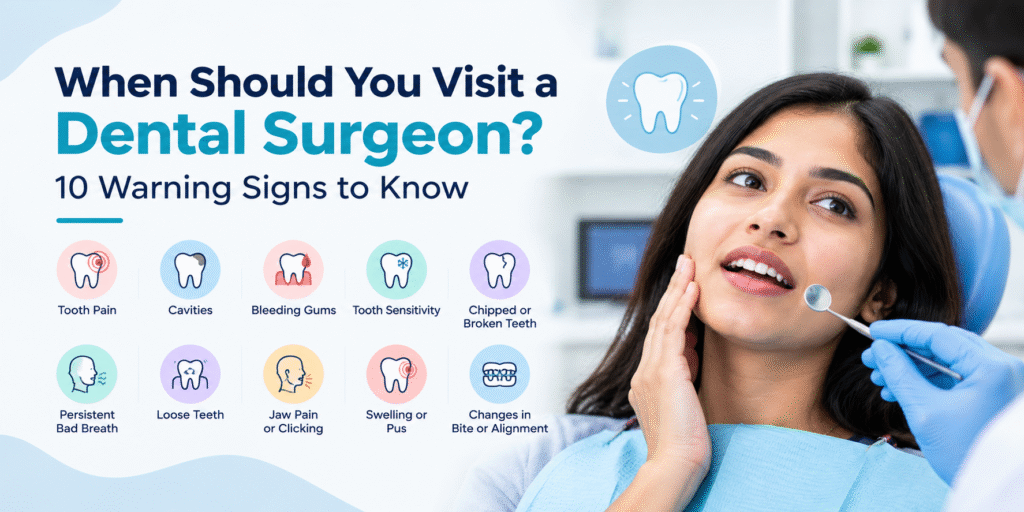
Dental problems can start with mild discomfort but may sometimes develop into conditions that require professional treatment. While regular dental check-ups help maintain healthy teeth and gums, certain symptoms may indicate the need for evaluation by a dental surgeon. Persistent tooth pain, swollen gums, impacted wisdom teeth, broken teeth, and dental infections should not be ignored.
If you are searching for a Dental Surgeon in Hinjewadi, Pune, understanding the warning signs that require professional attention can help you seek timely care. At Dentoface Dental Clinic in Hinjewadi, Pune, patients can enquire about dental consultations and suitable treatment options for their oral health concerns.
In this blog, we explain 10 warning signs that may indicate you should visit a dental surgeon, along with practical advice on when to seek urgent dental care.
What Does a Dental Surgeon Do?
A dental surgeon is a dental professional who diagnoses and treats conditions affecting the teeth, gums, and other structures of the mouth. Depending on their qualifications and clinical expertise, dental surgeons may perform procedures such as tooth extractions, wisdom tooth removal, surgical treatment for impacted teeth, and other oral surgical procedures.
A dental surgeon may be consulted when routine dental treatment is not sufficient or when a condition requires a surgical approach. The appropriate treatment depends on the diagnosis, the severity of the problem, and the patient’s overall oral health.
10 Warning Signs That You Should Visit a Dental Surgeon
- Persistent or Severe Toothache
Occasional tooth sensitivity may occur due to several reasons, but persistent or severe tooth pain should be evaluated by a dentist. It can be associated with tooth decay, infection, a cracked tooth, or inflammation inside the tooth.
You should seek professional dental care if you experience:
- Tooth pain that continues or repeatedly returns
- Pain while chewing or biting
- Sensitivity to hot or cold foods that lingers
- Pain that interferes with sleep or daily activities
A dental examination can help identify the cause and determine whether treatment such as a filling, root canal treatment, or extraction is necessary. Not every toothache requires surgery, but delaying treatment can allow some dental conditions to worsen.
- Swollen Gums or Facial Swelling
Swelling around a tooth, in the gums, or on the face may indicate a dental infection or another oral health problem. An abscess is a collection of pus that can develop around a tooth or in the surrounding gum tissues.
Warning signs include:
- Swollen or tender gums
- A pimple-like bump on the gums
- Pus or an unpleasant taste in the mouth
- Facial swelling near a painful tooth
- Fever accompanied by dental pain
Important: Dental swelling accompanied by fever or facial swelling requires urgent dental assessment. If swelling makes it difficult to breathe or swallow, seek emergency medical care immediately. Do not attempt to drain an abscess yourself.
Depending on the cause, treatment may involve drainage, root canal treatment, extraction, or other care. Antibiotics alone may not eliminate the source of a dental infection.
- Pain or Problems With Wisdom Teeth
Wisdom teeth are the last molars to emerge, usually during the late teenage years or early adulthood. Sometimes, there is insufficient space for them to erupt properly, causing them to become impacted or partially trapped beneath the gums.
You may need a dental evaluation if you notice:
- Pain at the back of your mouth
- Swelling around a partially erupted tooth
- Difficulty opening your mouth
- Repeated gum infections near a wisdom tooth
- Food getting trapped around the back molars
An examination and, when indicated, dental X-rays can help determine the position of the wisdom teeth. Removal may be recommended if they cause repeated infections, damage neighbouring teeth, or create other significant problems. Healthy wisdom teeth that are not causing problems do not always need to be removed.
If you are looking for wisdom tooth treatment in Hinjewadi, Pune, consult a qualified dental professional for an assessment.
- A Broken, Cracked, or Severely Damaged Tooth
A tooth may become damaged because of an accident, a sports injury, biting hard food, or untreated decay. Even a small crack can sometimes cause pain while chewing and may expose sensitive inner tooth structures.
Look out for:
- A visible chip or fracture
- Sharp pain while biting
- Sensitivity after a tooth injury
- Bleeding around a damaged tooth
- A tooth that has become loose after trauma
The treatment depends on how severely the tooth is damaged. Options may include bonding, a dental crown, root canal treatment, or extraction if the tooth cannot be restored.
If a permanent tooth is completely knocked out, seek emergency dental care immediately. Handle the tooth by its crown, avoid touching the root, and do not scrub it. If possible, keep it in milk or a suitable tooth-preservation solution while getting urgent professional help. Time is critical for the possibility of reimplantation.
- Difficulty Chewing or Biting Food
Pain or difficulty while chewing can be caused by tooth decay, damaged fillings, gum disease, a cracked tooth, impacted teeth, or bite-related problems.
You should arrange a dental appointment if:
- Chewing causes repeated pain
- Your teeth do not meet comfortably
- You experience pressure around a particular tooth
- You avoid certain foods because of dental discomfort
- Your jaw feels uncomfortable when eating
A dentist can examine your teeth, gums, and bite to identify the cause. Depending on the findings, treatment may involve restorative dentistry, bite correction, or oral surgery.
Do not assume that chewing discomfort is simply a normal part of ageing. Early evaluation may help prevent further damage.
- Loose Permanent Teeth
Permanent teeth should not become loose without a reason. Tooth mobility in adults can be associated with advanced gum disease, trauma, infection, or problems affecting the supporting bone.
Possible warning signs include:
- A tooth that moves when touched
- Bleeding or swollen gums
- Receding gums
- Discomfort while chewing
- Changes in the position of your teeth
A dental professional may assess the gums, supporting bone, and tooth stability. Treatment could involve periodontal care, stabilisation, or other procedures depending on the underlying problem.
If a permanent tooth becomes loose suddenly after an injury, seek prompt dental assessment. Avoid repeatedly moving the tooth with your fingers or tongue.
- Repeated Gum Infections or a Gum Abscess
Gum problems should not be ignored, especially when swelling, pus, or pain keeps returning. An infection may develop around a tooth, within the gum tissue, or around a partially erupted wisdom tooth.
Common symptoms include:
- Red, swollen, or tender gums
- Pus around a tooth
- Persistent bad breath or an unpleasant taste
- Bleeding gums
- Pain when chewing
A dental surgeon or other appropriately qualified dental professional can determine whether the problem is caused by gum disease, a tooth infection, or another condition.
Treatment may include professional cleaning, drainage, periodontal treatment, or addressing the affected tooth. Repeated gum infections require evaluation of the underlying cause rather than temporary relief alone.
- A Tooth That Cannot Be Restored With Routine Treatment
Severe decay or extensive tooth damage can sometimes make it difficult to preserve a tooth. In such cases, your dentist may discuss whether the tooth can be restored or whether extraction is necessary.
Possible warning signs include:
- Extensive visible tooth damage
- Recurrent infection around the same tooth
- A tooth that has fractured below the gumline
- Persistent pain associated with severe decay
- A tooth that cannot be restored predictably
Extraction should not be considered automatically. Depending on the condition of the tooth, alternatives such as root canal treatment and a crown may be possible.
A detailed examination helps determine the most appropriate treatment. If extraction is necessary, your dental professional can explain the procedure, recovery, and possible options for replacing the missing tooth.
- Jaw Pain, Limited Mouth Opening, or Difficulty Opening Your Mouth
Jaw discomfort can have several causes, including temporomandibular joint disorders, muscle tension, dental infections, trauma, and impacted teeth.
You should seek dental evaluation if you experience:
- Persistent pain near the jaw joint
- Difficulty opening your mouth fully
- Pain while chewing
- Jaw stiffness that does not improve
- Swelling around the jaw or lower face
Not every jaw problem requires surgery. A clinical assessment helps identify whether the issue is dental, muscular, joint-related, or associated with an infection.
Seek urgent care if jaw stiffness or limited mouth opening occurs with facial swelling, fever, or severe dental pain. Difficulty swallowing or breathing requires emergency medical attention.
- A Mouth Ulcer, Lump, or Lesion That Does Not Heal
Many mouth ulcers heal within one or two weeks. However, a persistent ulcer, unexplained lump, red or white patch, or unusual tissue change should be examined by a dentist or an appropriate medical professional.
Seek an assessment if you notice:
- A mouth ulcer lasting longer than two to three weeks
- An unexplained lump in the mouth or neck
- A red or white patch that persists
- Unusual bleeding without an obvious cause
- Persistent difficulty swallowing or unexplained oral discomfort
These symptoms do not automatically mean cancer, but they should not be ignored. Early evaluation helps identify the cause and determine whether further investigation or referral is needed.
When Is Dental Surgery an Emergency?
Some dental problems need urgent treatment rather than a routine appointment.
Seek emergency medical care immediately if you experience:
- Difficulty breathing or swallowing due to oral or facial swelling
- Rapidly spreading swelling of the face or neck
- Uncontrolled bleeding following a dental injury or procedure
- Severe facial trauma
- Signs of a serious infection accompanied by significant illness
For severe tooth pain, a suspected dental abscess, or a knocked-out permanent tooth, seek urgent dental care. Do not wait for symptoms to resolve on their own.
What to Expect During a Dental Surgeon Consultation
If you visit a dental clinic for a possible oral surgical problem, the assessment may involve the following steps.
- Discussion of your symptoms: The dental professional will ask about your pain, swelling, medical history, medications, and previous dental treatment.
- Oral examination: Your teeth, gums, bite, and surrounding tissues will be examined to identify possible causes.
- Diagnostic imaging: Dental X-rays or other imaging may be recommended when necessary to assess tooth roots, impacted teeth, infection, or supporting bone.
- Treatment planning: The professional will explain the diagnosis, suitable treatment options, possible risks, expected recovery, and associated costs.
- Aftercare instructions: If a procedure is required, you will receive guidance about pain management, oral hygiene, diet, follow-up visits, and signs of complications.
The exact process depends on your symptoms and the type of treatment required.
How to Reduce Your Risk of Dental Problems
Although not all dental problems can be prevented, consistent oral care can reduce the risk of tooth decay and gum disease.
- Brush twice daily with fluoride toothpaste.
- Clean between your teeth every day using floss or suitable interdental aids.
- Limit frequent sugary snacks and drinks.
- Avoid using your teeth to open packages or bite hard objects.
- Wear a suitable mouthguard during contact sports.
- Attend regular dental check-ups.
- Seek professional advice when pain, swelling, or other unusual symptoms appear.
- Follow your dentist’s recommendations for existing dental conditions.
Good oral hygiene and timely dental visits can help identify potential problems before they become more complicated.
Why Consult Dentoface Dental Clinic in Hinjewadi, Pune?
If you are experiencing tooth pain, wisdom tooth discomfort, damaged teeth, or other oral health concerns, seeking a timely dental assessment is important.
Dentoface Dental Clinic in Hinjewadi, Pune, is a local dental clinic you can contact to enquire about consultations and treatment options for your dental concerns. During your consultation, discuss your symptoms, ask about the available treatment approaches, and understand the expected cost and recovery requirements.
Choosing appropriate treatment begins with an accurate diagnosis. If a condition requires specialist oral surgery, ask about the treating professional’s qualifications and whether a referral is appropriate.
If you are searching online for a dental surgeon in Hinjewadi, Pune, do not delay seeking advice when symptoms persist or worsen.
Frequently Asked Questions (FAQs)
- When should I visit a dental surgeon?
You should seek a dental assessment for persistent tooth pain, facial or gum swelling, impacted wisdom teeth, broken teeth, loose permanent teeth, repeated infections, or other unusual oral symptoms. The dentist will determine whether surgical treatment is necessary.
- Does every toothache require dental surgery?
No. Many toothaches can be treated with fillings, root canal treatment, or other non-surgical procedures. Surgery may be considered when the tooth cannot be restored or when the condition requires a surgical approach.
- When should wisdom teeth be removed?
Wisdom teeth may need removal if they cause repeated infections, damage neighbouring teeth, develop certain cysts, or create other significant problems. An examination and appropriate imaging help determine whether removal is necessary.
- Is facial swelling from a tooth infection serious?
It can be serious, particularly if the swelling spreads or occurs with fever or difficulty opening the mouth. Seek urgent dental care. If breathing or swallowing becomes difficult, obtain emergency medical attention immediately.
- What is the difference between a dentist and a dental surgeon?
A general dentist provides preventive, diagnostic, and restorative dental care and may perform certain minor surgical procedures within their training and scope of practice. More complex oral surgical procedures may require a dentist with additional surgical training or an oral and maxillofacial surgeon.
- How much does dental surgery cost in Hinjewadi, Pune?
The cost varies according to the procedure, the complexity of the condition, diagnostic requirements, and the clinic’s fee structure. Contact the clinic for an assessment and an individual treatment estimate.
- Can a severely damaged tooth be saved?
Sometimes. Depending on the remaining tooth structure and the condition of the root and surrounding tissues, root canal treatment and a crown may preserve the tooth. Extraction may be necessary if the damage is too extensive to restore.
- How long does recovery from dental surgery take?
Recovery varies by procedure and individual health. Some minor procedures heal within several days, while surgical extractions and more complex procedures may take longer. Follow your dental professional’s aftercare instructions.
- Can I wait if my tooth pain comes and goes?
It is better to arrange a dental appointment if the pain repeatedly returns. Intermittent pain can still indicate decay, a crack, or another underlying problem. Early evaluation can help prevent complications.
- Where can I consult a dental clinic in Hinjewadi, Pune?
You can contact Dentoface Dental Clinic in Hinjewadi, Pune, to enquire about dental consultations and suitable treatment options. Confirm the availability of the specific service you need when booking your appointment.
Conclusion
Recognising the warning signs of dental problems can help you seek treatment before the condition becomes more serious. Persistent toothache, swollen gums, impacted wisdom teeth, broken teeth, loose permanent teeth, and non-healing mouth lesions are all reasons to arrange a professional assessment.
Not every dental problem requires surgery, but timely diagnosis can help determine the safest and most appropriate treatment.
If you are experiencing any of these symptoms, contact Dentoface Dental Clinic in Hinjewadi, Pune, to enquire about a dental consultation and discuss your treatment options. Taking action early can help protect your oral health and support a healthier smile.