A confident smile starts with knowing when it’s time to act. Most people wait years before asking a dentist about crooked teeth, gaps, or an uneven bite often because they aren’t sure if it’s a real problem or just how their teeth have always been.
Here’s how to tell the difference, what your options are, and what actually happens once you start treatment.
7 Signs You May Need Orthodontic Treatment
You don’t need visibly “crooked” teeth to benefit from orthodontic care. Watch for these signs:
1. Crowded or overlapping teeth When there isn’t enough space in your jaw, teeth twist or stack over one another. This makes brushing and flossing harder, which raises your risk of cavities and gum disease over time.
2. Gaps between teeth Noticeable spacing — especially between the front teeth — can affect both appearance and, in some cases, speech.
3. Overbite or underbite If your upper teeth sit far forward of your lower teeth (overbite) or your lower jaw juts out past your upper teeth (underbite), this can strain your jaw joint and wear teeth unevenly.
4. Difficulty biting or chewing Food getting “stuck” in a bite pattern, or chewing feeling uneven on one side, often points to a bite alignment issue.
5. Jaw clicking, popping, or pain Misalignment puts extra pressure on the jaw joint (TMJ). Clicking sounds or morning jaw soreness are worth getting checked.
6. Mouth breathing or speech difficulty Certain alignment issues affect tongue placement and airflow, contributing to lisping or a habit of breathing through the mouth.
7. You’re self-conscious about your smile This one doesn’t show up on an X-ray, but it matters. If you find yourself avoiding photos or hiding your smile, that’s a legitimate reason to get an evaluation — not just a cosmetic afterthought.
What Are Your Treatment Options?
Once a dentist confirms you have an alignment issue, you’ll typically be offered one of these:
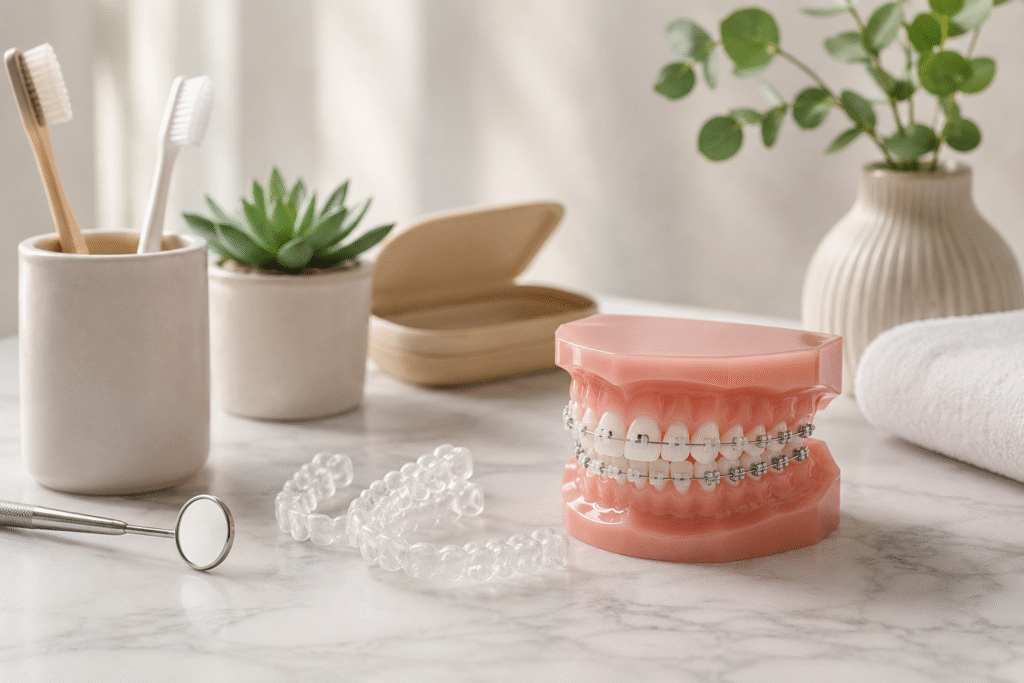
Traditional Metal Braces
Still the most effective option for complex cases — significant crowding, severe bite issues, or younger patients whose jaws are still developing. Brackets and wires apply steady pressure to guide teeth into position over time.
Ceramic Braces
Function the same way as metal braces but use tooth-colored brackets that blend in more, making them a popular choice for teens and adults who want a less visible option without switching to aligners.
Clear Aligners
Removable, custom-made trays (like Invisalign or similar systems) that gradually shift teeth. They’re popular with working professionals because they’re nearly invisible, can be taken out to eat, and require fewer in-person adjustments than braces — though they only work well for mild-to-moderate cases and require discipline, since results depend on wearing them the recommended 20–22 hours a day.
There’s no universal “better” option — it depends on the complexity of your case, your age, and your lifestyle. This is exactly what a consultation is for.
What Happens at an Orthodontic Consultation?
A first visit usually includes:
- A visual exam of your teeth, gums, and bite
- Digital X-rays to see root and jaw positioning
- Dental impressions or a digital scan
- A discussion of your goals, timeline, and budget
From there, you’ll get a treatment plan with an estimated duration — most cases run 12 to 24 months, though mild cases with aligners can finish faster.
Caring for Your Teeth During Treatment
Whichever option you choose, a few habits make a real difference in how smoothly treatment goes:
- Brush after every meal with a soft-bristle brush, especially around brackets and wires
- Floss daily — orthodontic floss threaders or a water flosser make this much easier with braces
- Avoid sticky or hard foods (caramel, hard candy, ice) that can bend wires or crack brackets
- Wear aligners consistently — inconsistent wear is the most common reason aligner treatment takes longer than expected
- Keep every follow-up appointment so adjustments stay on schedule
Frequently Asked Questions
Do I need braces if my teeth aren’t visibly crooked? Not always — but bite problems, jaw pain, or chewing difficulty can exist even with teeth that look straight. A consultation is the only way to know for sure.
Can adults get orthodontic treatment? Yes. There’s no upper age limit for braces or aligners, as long as your gums and jawbone are healthy enough to support tooth movement.
Are aligners painful? Most people feel mild pressure for a day or two after switching to a new tray — this is normal and fades quickly. It’s generally less noticeable than the adjustment period with braces.
How do I know if I need braces or aligners specifically? That depends on how severe your alignment issue is. Aligners work well for mild-to-moderate crowding or spacing; more complex bite or jaw issues usually need braces. Your dentist will recommend based on X-rays and a physical exam.
How often will I need appointments during treatment? Braces typically need adjustment every 4–6 weeks. Aligners require fewer in-clinic visits, usually every 6–8 weeks, since you’re switching trays yourself at home.
Ready to Find Out What You Need?
The only way to know for certain whether you need braces, aligners, or no treatment at all is a professional evaluation. If you’re in Hinjewadi and want a clear answer — not just a sales pitch — book a consultation with our orthodontic treatment team at Dentoface. We’ll walk you through your X-rays, explain your options honestly, and help you decide what’s right for your smile and your budget.
Dentoface Dental Clinic Capital Market Road, next to Datta Mandir, Phase 3, Hinjewadi Rajiv Gandhi Infotech Park, Hinjewadi, Pune, Maharashtra 411057 📞 +91 93223 80886 | 📧 dentofacepune@gmail.com
Written by Dr. Arundhati Hinge, BDS — Orthodontist & Implant Specialist at Dentoface. Last reviewed August 2026.