Losing a tooth changes more than your smile. It affects how you chew, how your other teeth shift over time, and — for many people how confident they feel speaking or laughing in public. The good news: there are several proven ways to replace a missing tooth. The less obvious part is that they are not interchangeable, and the “best” option genuinely depends on your situation.
Here’s an honest breakdown of your three main options, so you can walk into a consultation already knowing what questions to ask.
What Happens If You Leave a Missing Tooth Untreated?
Before comparing options, it’s worth understanding why replacement matters at all, beyond appearance:
- Bone loss — the jawbone under a missing tooth begins to shrink without a tooth root stimulating it, which can change your facial structure over time
- Shifting teeth — neighboring teeth gradually drift into the empty space, throwing off your bite
- Uneven bite pressure — this can lead to jaw strain and accelerated wear on other teeth
- Harder-to-clean gaps — new gaps often trap food and plaque, raising cavity and gum disease risk in nearby teeth
None of this happens overnight, but it’s the reason dentists rarely recommend “just leaving it.”
Option 1: Dental Implants
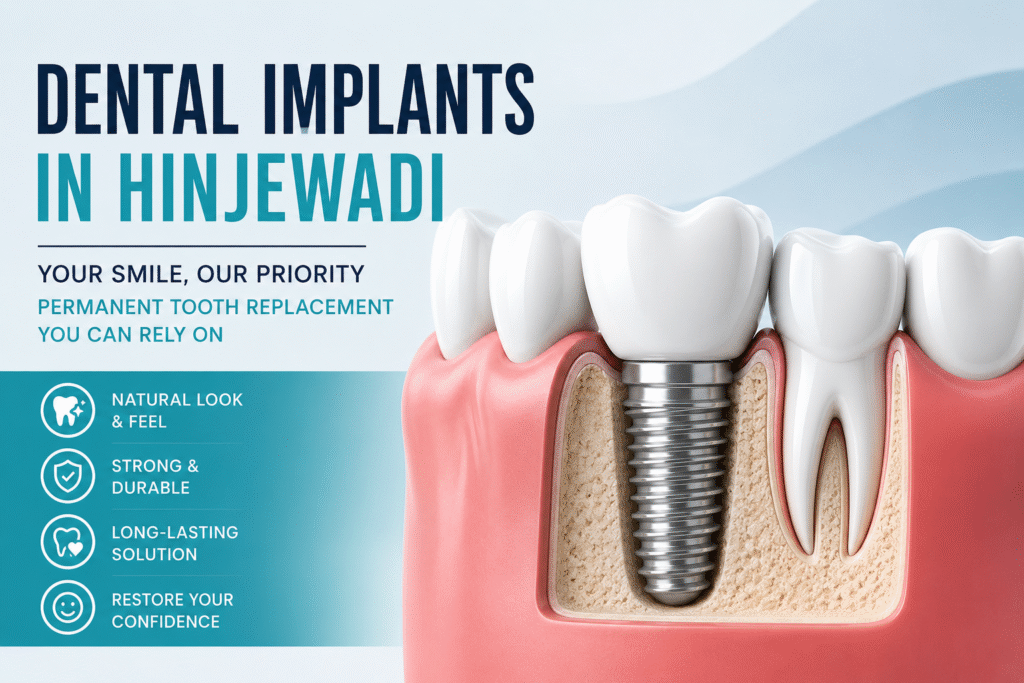
A titanium post is placed directly into the jawbone, acting as an artificial tooth root. Once it fuses with the bone (a process called osseointegration, which takes a few months), a custom crown is attached on top.
Best for: people who want the closest thing to a natural tooth — in function, appearance, and longevity.
Pros:
- Doesn’t rely on neighboring teeth for support
- Stimulates the jawbone, preventing the bone loss that other options don’t address
- Can last decades with proper care
- Feels and functions like a natural tooth when eating or speaking
Trade-offs:
- Higher upfront cost than bridges or dentures
- Requires adequate jawbone density (a bone graft may be needed if bone has already thinned)
- Takes longer overall healing and integration span several months before the final crown goes on
Option 2: Dental Bridges
A bridge replaces a missing tooth by anchoring a false tooth to the crowns of the teeth on either side of the gap.
Best for: replacing one or two adjacent missing teeth when the neighboring teeth are already strong and healthy.
Pros:
- Faster treatment timeline than implants typically done in two visits
- Lower upfront cost than implants
- No surgery required
Trade-offs:
- Requires reshaping the neighboring healthy teeth to support the bridge
- Doesn’t stop bone loss in the jaw under the missing tooth
- Usually needs replacement every 10–15 years
Option 3: Dentures
Removable full or partial sets of replacement teeth, custom-fitted to your mouth.
Best for: patients missing several or all teeth, or those who prefer a non-surgical, lower-cost option.
Pros:
- Most affordable option upfront
- No surgery involved
- Can replace an entire arch of teeth at once
Trade-offs:
- Can shift or feel loose over time as the jawbone changes shape
- Requires adhesives for some patients
- Doesn’t prevent jawbone shrinkage the way implants do
- Generally offers less chewing strength than implants or bridges
So, Which One Is Actually Right for You?
There’s no single “best” answer it depends on a few honest factors:
- How many teeth are missing? One tooth often makes an implant or bridge practical; several teeth may point toward dentures or multiple implants
- What’s your jawbone density like? This can rule implants in or out without a bone graft
- What’s your budget and timeline? Implants cost more upfront but often save money long-term since they rarely need replacing
- Do you have healthy neighboring teeth? If yes, a bridge becomes a realistic (and cheaper) option; if the goal is to avoid touching healthy teeth at all, implants are the better fit
A dentist can only give you a real recommendation after seeing X-rays and assessing your bone and gum health — which is why this decision shouldn’t be made from a blog post alone (including this one).
Caring for Your Replacement Teeth
Regardless of which option you choose, long-term success comes down to the same habits:
- Brush twice daily and floss around the replacement area carefully
- Use an antibacterial mouthwash if recommended
- Avoid smoking, which slows healing and undermines implant success rates specifically
- Keep regular dental checkups so any shifting, wear, or gum issues are caught early
Frequently Asked Questions
Is a dental implant always better than a bridge? Not always. Implants offer better long-term bone health and don’t require altering healthy neighboring teeth, but bridges are faster, cheaper, and sometimes more practical depending on your situation.
What’s the success rate of dental implants? Implants have a success rate above 95% when placed by an experienced professional and properly maintained.
Can I get dentures instead if I’m missing just one tooth? Technically yes, but for a single missing tooth, an implant or bridge is usually more practical and comfortable than a removable partial denture.
How do I know if I have enough jawbone for an implant? This requires a dental X-ray or 3D scan — it can’t be determined visually. A bone graft can often address insufficient density if needed.
Do implants hurt? The placement procedure is done under local anesthesia, so it’s not painful during the procedure. Mild soreness for a few days afterward is normal and manageable with medication.
Ready to Find Out What’s Right for You?
The only way to know which option truly fits your situation is a proper evaluation — X-rays, a bone density check, and an honest conversation about your budget and timeline. If you’re in Hinjewadi and ready to explore your options, our team can walk you through dental implant treatment in detail, or help you compare it against bridges and dentures based on what your mouth actually needs.
Dentoface Dental Clinic Capital Market Road, next to Datta Mandir, Phase 3, Hinjewadi Rajiv Gandhi Infotech Park, Hinjewadi, Pune, Maharashtra 411057 📞 +91 93223 80886 | 📧 dentofacepune@gmail.com
Written by Dr. Arundhati Hinge, BDS — Orthodontist & Implant Specialist at Dentoface. Last reviewed August 2026.