DentoFace: Precision in Dentistry.

Pediatric Dentist in Hinjewadi

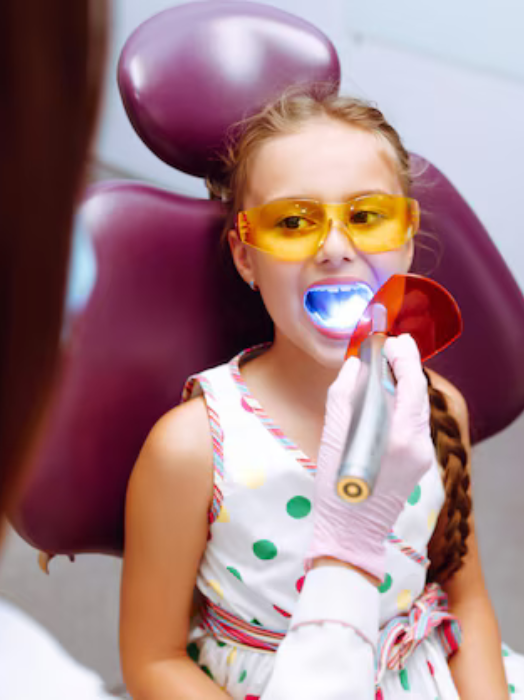
Gentle, fun-focused dental care tailored to children’s unique oral health needs and growing smiles.
Pediatric Dentist in Hinjewadi
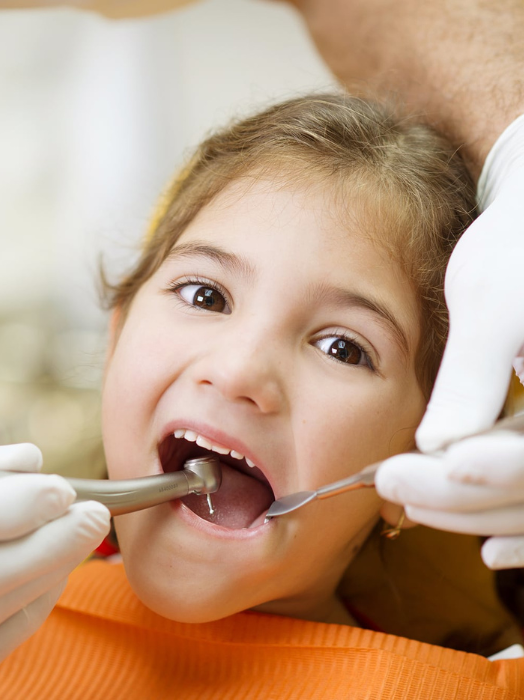
Best Pediatric Dentist in Hinjewadi

Why is Pediatric Dentistry (Kids Dentistry) important?

Humans start teething when they are as young as 6 months old and develop their set of primary ‘milk’ teeth.

At the age of 6–7 years, humans start losing their milk teeth and a permanent set of teeth begins to emerge. Because the milk teeth will eventually fall off, some parents tend to ignore taking their child to a dentist.

However, these milk teeth form the basis for the development of healthy permanent teeth. If proper care is not taken, dental problems can arise that may last a lifetime. In recent years, cases of dental caries in children have increased significantly. Therefore, it is always advised to start taking care of your baby’s teeth at a very early stage of life. This includes establishing a good oral hygiene routine and scheduling regular visits to a Pediatric dentist in Hinjewadi to ensure proper dental development and early prevention of oral issues.
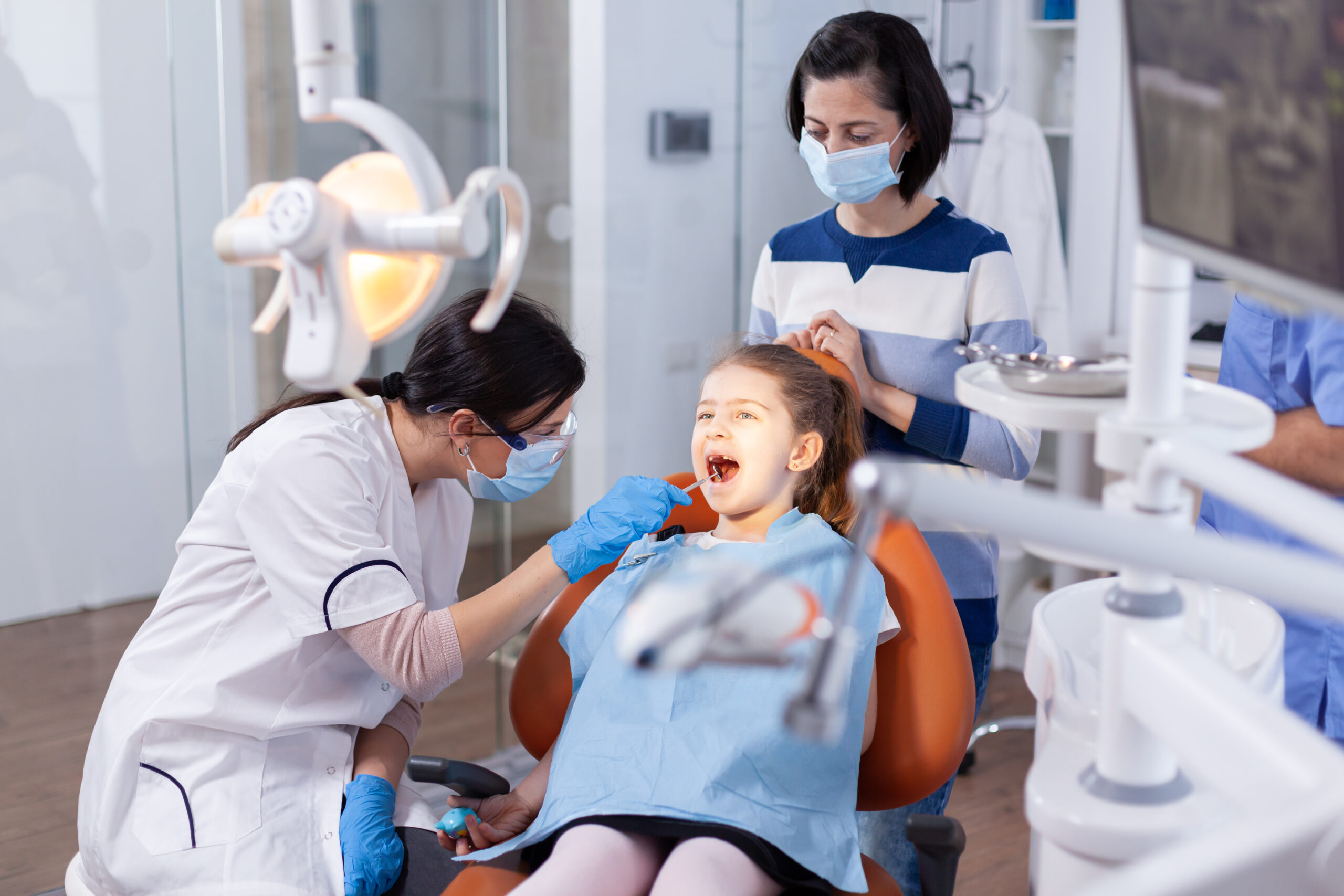
Find Best pediatric dentist in hinjewadi

Why do we need a Kids Specialist?

Kids Dentist or are trained to take care of dental complexities of kids and teens. Pediatric dentistry is a separate field dedicated to kids, their Oral Health prevention and preparation for the future.

What treatment modalities are offered by the Pediatric Dentist

Pediatric Dentist work towards maintaining good oral health in kids. The treatment provided by them includes:

Treatment options for Kids

Root Canal Treatment in Milk Teeth

If you think your child is too young to need root canal treatment, think again — there is no age limit for this treatment. If his/her primary (baby) teeth have been injured, or if decay has advanced deep into the roots of your child’s teeth, a root canal treatment to stabilize teeth may be needed. Root canal treatment removes the infection from the pulp, the living tissue that is found inside the tooth’s roots. The pulp contains the tooth’s nerves, so tooth pain is often an indication that decay has moved into the pulp. Root canal treatment is a simple procedure wherein instruments are used to clean the root canals of teeth followed by inserting a medication so as to maintain the teeth properly in the oral cavity.

Oral Habits in Children

Frequently, children acquire certain habits that may either temporarily or permanently harm their teeth and tooth-supporting structures. These habits develop as a result of repetition. In the initial stages, there is a conscious effort to perform the act; later, the act becomes less conscious and, if repeated often enough, may enter the realm of unconsciousness. Some common oral problems seen in children include thumb sucking, mouth breathing, tongue thrusting, lip biting, teeth grinding, and nail-biting.

Certain reminding appliances, known as habit-breaking appliances, assist children who are willing to quit the habit but are unable to do so because it has reached a subconscious level. These appliances may be removable or fixed and are best recommended after evaluation by a Pediatric dentist in Hinjewadi to ensure safe and effective correction.

Common Appliances in Pediatric Dentistry:

Prevention Treatments for Kids:

Fluoride application

A common problem for which parents usually take their children to the dentist is decay. This is because there is a lack of proper dexterity of brushing in children. To avoid the problem of decay, parents should get the Fluoride application treatment in children at regular intervals. Fluoride helps to fight plaque and bacteria which can cause enamel loss which further causes cavities. Fluoride also strengthens the tooth structure & helps in bone growth. Under this treatment, the dentist incorporates fluoride ions into the tooth structure making them more prone to acid dissolution. This treatment is equally useful for both milk & permanent teeth.

Sealants

The main reason for decay is the food and bacteria that is trapped in the pits & fissures of teeth. We chew food from the back teeth like molars and premolars which are never flat. The pits & fissures as discussed above are the depressions on these back teeth. They function as potential traps for bacteria & food and make it susceptible to decay. Therefore, as a preventive measure, certain pits and fissure sealants are placed. Dental sealants then come to the rescue. Sealants are plastic coatings placed on the chewing surface of the permanent tooth. They protect the tooth from decay. Because of fissures the permanent back teeth, molars, and premolars are vulnerable to decay. As we talked about the habits, it is important to inculcate the habit of maintaining good oral health at a very initial stage. This is an investment which will pay lifelong dividends in the form of healthy teeth and a healthy lifestyle. Parents should take initiatives to teach their children the correct technique of brushing and for that, it is highly important that they themselves should know the correct way of brushing. Make brushing a fun-filled activity for your child, brush along with them and encourage them to take preventive actions.

Toothpaste and Toothbrush

Apart from the aforementioned treatment options, make sure that your kids brush twice daily. Brushing before sleeping is extremely important because the food you eat during the day get stuck between your teeth and bacteria in your mouth will feed on that food overnight causing decay. If possible teach your child how to floss as it is the added protection for your teeth

What to pay for kids’ dentistry services?

Pediatric dental visits cost a little less than adult visits generally. For most of the services like cleaning and common checkup, the prices are affordable. However, some dental treatments can be marginally higher in cost if your child’s dental health is not immaculate. You can learn more about them in detail by visiting any of our dental clinics in India. Clove has experienced specialists for kids dental care right in your neighborhood. Ideally, it is advised that a child’s first dental visit should be planned when the first tooth erupts

Book Appointment

Book An Appointment