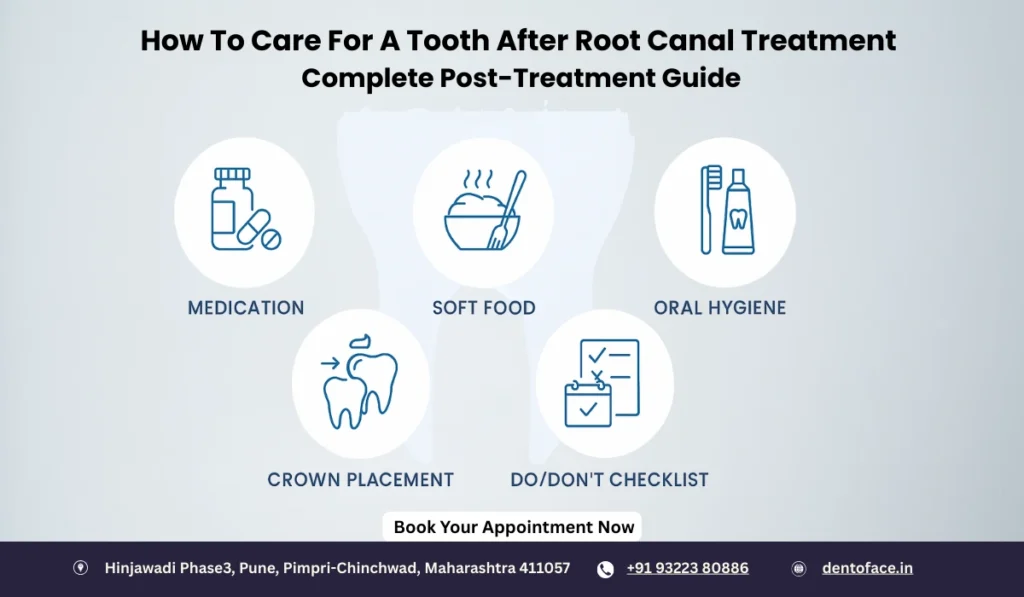
Root canal therapy is one of the most reliable dental procedures to save an infected or damaged tooth. Once this treatment is complete, most patients feel immediate relief from pain and discomfort. However, what truly determines the long-term success of your root canal is how well you care for the treated tooth afterward.
Proper aftercare not only speeds up healing but also protects your restored tooth from future damage, sensitivity, or reinfection. Whether you recently completed root canal treatment in Hinjewadi or are preparing for an upcoming procedure, this detailed guide will help you understand step-by-step how to care for your tooth for lasting results.
Why Post-Treatment Care Matters After a Root Canal
A root canal removes infected pulp from the tooth, cleans the canals, and seals them to prevent further infection. Although the infection is cleared, the treated tooth is still healing and may remain slightly tender for a few days.
Post-treatment care is important because it helps you:
- Reduce pain and swelling
- Avoid biting or chewing injuries
- Prevent reinfection
- Increase the lifespan of the treated tooth
- Support successful crown placement
Following your dentist’s instructions ensures a smooth and safe recovery.
What to Expect Immediately After Root Canal Treatment
Mild Discomfort
It is normal to experience slight soreness for 24–48 hours. This happens because tissues around the tooth were inflamed due to infection.
Temporary Filling Sensation
If your dentist placed a temporary filling, the tooth may feel slightly uneven or raised.
Numbness for a Few Hours
Numbness from anesthesia usually lasts 2–3 hours. Avoid chewing until it wears off.
Essential Care Tips After a Root Canal Treatment
Take Medications As Prescribed
Your dentist may prescribe:
- Pain relievers
- Anti-inflammatory medications
- Antibiotics (if infection was severe)
Take them exactly as instructed to support healing and prevent discomfort.
Avoid Chewing on the Treated Tooth Until the Crown Is Placed
After your root canal, the tooth becomes weak because it no longer contains living tissue. Chewing hard food may cause cracking or fracture.
Do this instead:
- Chew on the opposite side
- Eat soft foods for the first 24 hours
- Avoid nuts, chips, ice, sweets, and anything hard
Once your permanent crown is placed, your tooth will be strong enough to resume normal function.
Follow a Soft Food Diet for the First Day
Soft foods help prevent pressure on the treated tooth.
Recommended foods:
- Soup
- Dosa, idli, upma
- Soft rice
- Smoothies
- Yogurt
- Khichdi
- Scrambled eggs
Avoid:
- Sticky foods like chewing gum
- Crunchy foods like popcorn
- Hard foods like chikki or peanuts
Maintain Good Oral Hygiene
Even though the tooth is treated, bacteria can still affect surrounding gums.
Follow these steps:
- Brush gently around the treated area
- Use a soft-bristled toothbrush
- Avoid vigorous rinsing for 24 hours
- Start warm salt water rinses after one day
A clean mouth reduces the risk of reinfection and supports faster healing.
Avoid Smoking and Alcohol
Smoking delays healing and increases the risk of inflammation.
Alcohol should be avoided if you are taking antibiotics or pain medications.
Do Not Miss Your Follow-Up Appointment
A follow-up visit is essential to:
- Check healing
- Remove temporary filling
- Place a permanent crown
Delaying this step increases the risk of the tooth breaking.
At the best dental clinic Hinjewadi, dentists emphasize completing your crown placement on time to protect the treated tooth from fractures.
Importance of Placing a Dental Crown After a Root Canal
After a root canal, a crown is usually recommended to strengthen and protect the tooth. Without a crown, the tooth may become brittle and fracture.
Benefits of a crown:
- Improves chewing strength
- Enhances appearance
- Protects from cracks
- Prevents reinfection
- Extends tooth life
Your dentist will usually schedule the crown placement within 5–7 days after the procedure. Read Here Which cap is best for Root Canal Treatment ?
Signs That Indicate You Should Contact Your Dentist
While minor discomfort is normal, certain symptoms require immediate attention.
Contact your dentist if you notice:
- Severe or ongoing pain
- Swelling on the face or gums
- Bad taste or discharge from the tooth
- Fever
- Cracked or loose temporary filling
- Pain while biting even after a week
Seeking help early prevents complications and ensures proper recovery.
Long-Term Care After Your Root Canal
To keep your tooth healthy long-term:
Maintain daily oral hygiene
- Brush twice a day
- Floss regularly
- Use an antibacterial mouthwash
Consider using night guards
If you grind your teeth at night, your dentist may recommend a night guard to prevent stress on the treated tooth.
Visit your dentist every 6 months
Regular dental checkups help monitor the strength and condition of the restored tooth.
Patients who get their root canal treatment in Hinjewadi often benefit from digital imaging, modern sterilization, and advanced aftercare guidance offered at leading dental clinics.
Why Choose Dentoface – The Best Dental Clinic in Hinjewadi
Dentoface is recognized as the best dental clinic in Hinjewadi for providing high-quality, painless, and advanced root canal treatments.
What makes Dentoface stand out:
- Experienced endodontists
- Microscopic and rotary RCT techniques
- Painless single sitting root canal options
- Strict sterilization protocols
- Modern digital X-rays and imaging
- Comfort-focused environment
Their personalized aftercare approach ensures every patient feels confident and supported throughout the healing process.
Expert Tips to Speed Up Healing After a Root Canal
✔ Apply a cold compress
Helps reduce swelling and discomfort.
✔ Stay hydrated
Drinking water keeps your mouth clean and supports tissue healing.
✔ Avoid extreme temperatures
Very hot or cold foods can trigger sensitivity.
✔ Do not skip meals
Even soft meals help maintain energy for recovery.
✔ Follow all instructions strictly
Each patient’s case is unique — personalized guidance ensures the best results.
Myths vs. Facts About Root Canal Aftercare
Myth 1: Pain indicates failure.
Fact: Mild pain is normal for a few days.
Myth 2: You don’t need a crown after a root canal.
Fact: Most treated teeth require crowns for long-term protection.
Myth 3: You can resume chewing normally right away.
Fact: You must avoid chewing until your permanent crown is placed.
Myth 4: A root canal weakens all teeth.
Fact: Only the treated tooth becomes less flexible — a crown restores strength.
Frequently Asked Questions
- How long does it take to recover from a root canal?
Most people recover within 2–3 days, but tenderness may last up to a week.
- Can I eat immediately after the procedure?
Wait until numbness wears off, then choose soft foods.
- Why is a crown needed after a root canal?
A crown strengthens the tooth, prevents cracking, and protects it from future damage.
- What should I avoid after root canal treatment?
Avoid chewing on the treated side, consuming hard foods, smoking, or drinking alcohol.
- Is pain normal after a root canal?
Mild discomfort is normal, but severe pain should be reported to your dentist.
- Can a root canal fail?
Yes, but proper aftercare and timely crown placement significantly reduce this risk.
- How do I know if my tooth is healing well?
Pain reduces daily, gums appear normal, and no swelling or discharge occurs.
- When should I visit the dentist after the root canal?
A follow-up visit is usually scheduled within a few days to plan the crown placement.
Conclusion
Caring for your tooth after a root canal is essential for long-term success. With proper care, a treated tooth can last a lifetime. By following your dentist’s instructions, maintaining good oral hygiene, and completing your crown placement on time, you ensure the best outcomes.
If you are searching for reliable and comfortable root canal treatment or expert aftercare support, visiting the Dental clinic in Hinjewadi will give you access to experienced specialists and advanced technology for optimal results.