What is nail biting and why do people do it?
Nail biting is one of the most common habits, especially among children and teenagers. While it may seem harmless, frequent nail biting can cause long-term damage to your teeth, gums, and overall oral health. As a leading Dentist in Hinjewadi, we often see patients struggling with dental problems caused by this seemingly small habit.
In this blog, we’ll explore the causes, effects, and ways to manage nail biting — particularly in children — and discuss how you can protect your smile from the hidden dangers of this habit.
Why is nail biting harmful for your teeth and gums?
Nail biting causes repeated pressure on the teeth and gums, which leads to several dental problems such as:
- Chipped or cracked teeth: Nails are hard and can wear down tooth enamel over time.
- Enamel damage: Constant friction weakens enamel, increasing sensitivity and cavity risk.
- Gum injury: Sharp nail edges or bacteria from hands can irritate or infect the gums.
- Jaw strain: Continuous pressure can affect jaw muscles and cause pain.
- Misaligned teeth: In children, nail biting can interfere with proper tooth alignment.
- Bad breath: Germs from nails can transfer to the mouth, leading to odor and infection.
Regular dental check-ups with a Dentist in Hinjewadi can help detect early signs of enamel wear, gum irritation, or alignment issues caused by nail biting.
How does nail biting affect children’s oral health?
Children are more vulnerable to the effects of nail biting because their teeth and jaws are still developing.
It can cause:
- Uneven tooth growth
- Misaligned permanent teeth
- Gum swelling or bleeding
- Increased risk of oral infections
- Reduced enamel strength
Children may not realize how harmful the habit is, so parents need to guide and support them early to prevent long-term dental issues.
How can parents manage nail biting in children?
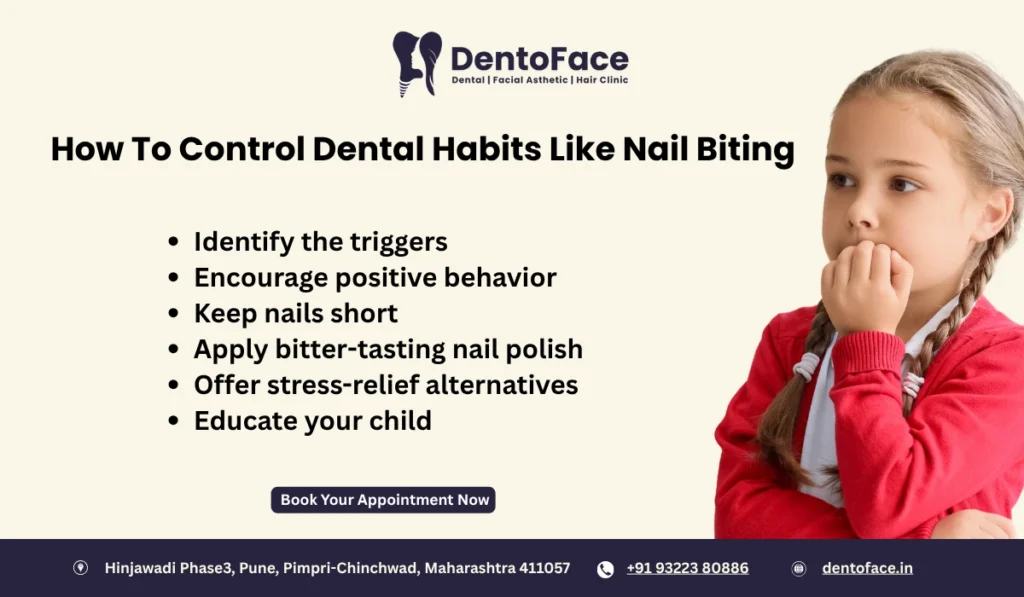
Managing nail biting in children requires understanding, patience, and consistency. Here are some practical steps for parents:
- Identify the triggers:
Observe when and why your child bites their nails — it could be anxiety, boredom, or stress. - Encourage positive behavior:
Reward your child for keeping their nails unbitten instead of scolding them. Small incentives can motivate change. - Keep nails short:
Trim nails regularly to reduce the temptation. - Apply bitter-tasting nail polish:
Pediatric-safe, bitter coatings remind children not to bite their nails. - Offer stress-relief alternatives:
Give them a stress ball, clay, or drawing tools to keep their hands busy. - Educate your child:
Explain how nail biting harms teeth and gums. Simple visuals or dental visits can make this lesson more effective.
What are some ways to stop a child from biting nails at home?
Here’s a step-by-step plan parents can follow:
Step 1: Awareness
Help your child recognize when they bite nails. Gently remind them each time.
Step 2: Distraction
Engage them in activities that keep their hands occupied — art, sports, or games.
Step 3: Oral hygiene focus
Teach proper brushing and tongue cleaning to keep the mouth fresh and discourage bad habits.
Step 4: Healthy diet
Ensure your child eats foods rich in calcium and vitamins for stronger nails and teeth.
Step 5: Consistent encouragement
Encourage small wins and celebrate progress to keep motivation high.
What should I do if my child’s nail biting causes dental damage?
If nail biting has led to visible damage like chipped teeth, gum bleeding, or sensitivity, it’s time to visit a Dentist in Hinjewadi for an assessment.
A dentist can:
- Check for enamel cracks or weakened teeth.
- Suggest a habit-breaking appliance (like a dental guard) to prevent biting.
- Provide gentle gum care or fluoride treatment to strengthen teeth.
- Offer habit counseling for children to understand and manage the behavior.
Timely treatment prevents long-term dental and alignment problems.
Can nail biting cause infection?
Yes, absolutely. Fingernails trap dirt and bacteria that can easily enter your mouth when bitten. This can lead to:
- Mouth ulcers
- Gum inflammation
- Bad breath
- Bacterial or fungal infections
Children who bite nails and also have minor skin cuts around the fingers are more at risk. Maintaining clean hands and oral hygiene is essential to prevent infection.
Is nail biting a sign of stress or anxiety?
Yes, in many cases, nail biting is linked to emotional triggers like anxiety, boredom, or tension. It acts as a coping mechanism, especially in children and teens.
If stress is the cause, parents should focus on emotional management rather than punishment. Calming activities like reading, yoga, or art therapy can help children express their emotions in healthier ways.
How can adults stop nail biting?
Adults often struggle with nail biting due to stress or habit. Here are some effective solutions:
- Identify triggers: Recognize stressful moments when you tend to bite nails.
- Mindfulness: Practice relaxation or meditation techniques.
- Keep nails well-groomed: Regular manicures discourage biting.
- Use bitter-tasting nail products: These help create awareness and discourage the habit.
- Stay hydrated and eat well: Healthy nails reduce the urge to bite.
- Replace the habit: Use fidget toys, pens, or soft objects to keep your hands busy.
If the habit causes visible dental issues like enamel wear or tooth sensitivity, visiting a dental clinic for preventive treatment is important.
Can nail biting affect braces or orthodontic treatments?
Yes. Nail biting puts extra pressure on braces and orthodontic appliances, increasing the risk of wire damage or bracket loosening.
It can also shift tooth positions unintentionally, delaying treatment progress.
Children with braces should be reminded often to avoid biting nails or any hard objects. Regular check-ups at your dental clinic ensure the braces remain properly aligned.
Are there medical or behavioral therapies for severe nail biting?
For persistent nail biting caused by anxiety or stress, behavioral therapies can be effective.
These include:
- Habit Reversal Therapy (HRT): Helps identify triggers and teaches alternative responses.
- Cognitive Behavioral Therapy (CBT): Addresses the emotional cause behind the habit.
- Relaxation techniques: Deep breathing, yoga, or mindfulness exercises to reduce anxiety.
In severe cases, dentists and pediatricians can work together to provide a combined dental and psychological approach.
How does regular dental care help nail biters?
Regular dental visits help prevent long-term effects of nail biting. Your dentist can:
- Identify early enamel damage or cracks.
- Clean and protect gums from bacterial infections.
- Suggest fluoride treatments to strengthen enamel.
- Provide custom mouthguards for protection.
- Offer personalized guidance for breaking harmful habits.
Good oral care practices — brushing twice daily, cleaning your tongue, and using mouthwash — help maintain freshness and reduce bacteria from nail contact.
How can parents create a supportive environment for children?
Breaking a habit like nail biting takes time. Parents should create a positive environment through:
- Understanding rather than punishing the child.
- Tracking progress together — mark “no biting” days on a calendar.
- Encouraging emotional expression through talking or journaling.
- Rewarding improvement with small incentives or verbal praise.
Children respond best to encouragement and empathy. Over time, they learn to replace the habit with healthier behaviors.
When should I see a dentist about nail biting?
You should see a dentist if you or your child experience any of the following:
- Tooth sensitivity or visible chipping
- Bleeding or swollen gums
- Bad breath or mouth infections
- Difficulty biting food properly
- Worn enamel or visible tooth flattening
Early dental evaluation ensures damage is managed before it worsens. Your dentist may also provide preventive dental sealants or protective appliances if needed.
What’s the long-term benefit of stopping nail biting?
When you or your child stop nail biting, you gain:
- Stronger, healthier teeth
- Better gum health
- Fresher breath
- More confident smile
- Improved overall hygiene
Most importantly, it builds self-discipline and confidence in managing habits positively.
How can a dental professional help?
A professional dental consultation provides the right guidance and treatment. At Dentoface Dental Clinic in Hinjewadi, our team educates both parents and children on safe, effective ways to stop nail biting.
We focus on preventive care, enamel protection, and habit correction to restore and maintain your oral health. Whether you’re an adult or a parent seeking help for your child, professional advice makes the process smoother and more successful.
What’s the key takeaway from this topic?
Nail biting may seem small but can have big effects on your oral health.
By identifying triggers, practicing stress management, and seeking timely dental care, you can successfully break this habit.
Healthy habits create healthy smiles — start today and protect your teeth for life.
Read Here: Best Dental clinic in Hinjewadi